Make your journey great with edgeline gokart championship
Work Follow-Up Sessions
Where Engineering Discipline Is Built
In many competitions, teams register… receive a rulebook… and are left alone.
At Edgeline Go-Kart Championship, we do things differently.
We believe India's motorsport future will not be built by chance . it will be built through structured guidance, disciplined engineering, and continuous follow-up.
That is why we conduct Work Follow-Up-1 and Work Follow-Up-2 sessions to ensure that every team moves forward in the correct technical direction.
These sessions are one of the strongest reasons why Edgeline Go-Kart Championship stands among India's most structured student motorsport platforms.

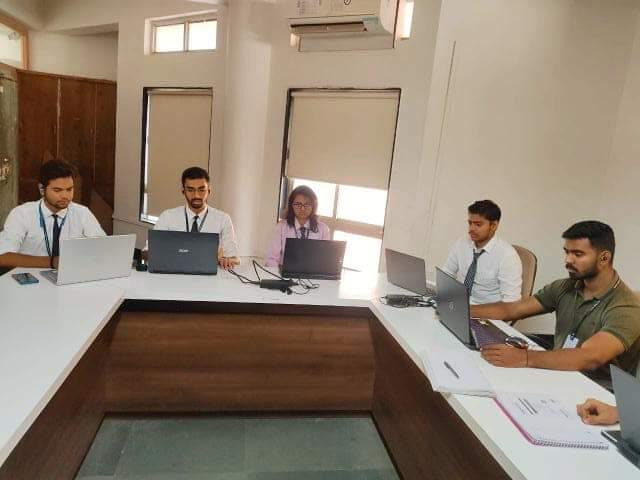

What Are Work Follow-Up Sessions?
After the Rulebook Session, teams enter the most important academic stage of the championship Static Presentation Preparation.
This is where engineering thinking begins.
At the Edgeline Go-Kart Championship, Work Follow-Up Sessions are specially designed to support teams during:
- Design Presentation
- Business Presentation
- Cost Report
- Simulation and Documentation
These sessions ensure that teams do not just build vehicles
they build validated engineering systems.
This structured follow-up approach is one of the key reasons why Edgeline is recognized as a serious engineering-based go-kart championship in India.
When Work Follow-Up Sessions Happen
Work Follow-Up Sessions begin after the Rulebook Session and continue until static submission deadlines.
They focus completely on:
- Static presentation development
- Technical documentation accuracy
- Business and costing validation
- Design and simulation correctness
Static presentations are conducted before the dynamic event, allowing teams to complete engineering validation early. This structured approach improves performance in on-ground racing stages.
Work Follow-Up-2
Static Engineering Review
Final Static Preparation Validation
This session ensures that teams are ready for final submission.
Main focus:
Work Follow-Up-1
Static Engineering Review
This is the first major checkpoint after teams begin their design and documentation work.
Initial Static Progress Review
This session checks whether teams have started their work correctly.
Main focus:
This stage ensures that the foundation of the project is correct before moving forward. Also Teams receive technical corrections before moving to deeper analysis.
This session reduces last-minute corrections and helps teams prepare professionally before static submissions.This stage prevents last-minute errors that reduce scoring
What Teams Must Submit.
Static Presentations
Design submission must include:
Design submission must include:
- Technical specifications
- Material selection logic
- Steering geometry
- Powertrain details
- Safety analysis
- CAD models
- Simulation reports
As described in the official design template, teams must submit:
- CAD files in STP format
- Analysis files
- Technical parameter tables
- Safety calculations
These elements are clearly defined in the design template structure.
Business Presentation
Business presentation must explain:
- Market Analysis
- Product & Cost Strategy
- Break-Even Analysis
- Business Model Canvas
- Sales Strategy
- Environmental Impact
The official business template includes structured sections such as:
- Market comparison
- Revenue models
- Cost distribution
- Customer segments
- Business planning logic
These sections help teams think beyond engineering toward industry-level product thinking.
Cost Report
Cost report must include:
- Component costing
- Vendor quotations
- Manufacturing cost
- Processing cost
- Bill verification
All financial estimates must be supported with valid documents.
Engineering without financial validation is incomplete
Common Mistakes Made by Previous Teams
Static Presentation Mistakes (Most Important Section) These are real mistakes observed across multiple seasons.
Avoiding them significantly increases scoring potential.
This is the most frequent mistake.
Teams often:
- Change template structure
- Skip required sections
- Present data inconsistently
The design template clearly defines structured sections including:
- Abstract
- Technical Specification
- Material Selection
- Impact Analysis
- Steering Geometry
- Powertrain Details
Skipping these sections results in incomplete evaluation.
Some teams submit only slides.
But required engineering files include:
- CAD Models
- Simulation Files
- Calculation Reports
According to template requirements, teams must submit CAD files in STP format and complete analysis reports separately.
Without validation data design is considered incomplete.
A very common mistake in Business Presentation.
Teams mistakenly include:
Brake System Details
Instead of:
Break-Even Analysis
Break-Even Analysis must show:
- Cost vs Revenue
- Production volume
- Profit calculation
- Recovery period
This reflects real industrial thinking.
Cost reports without supporting proof lose credibility.
Required:
- Component Bills
- Supplier Quotations
- Material Cost Proof
These documents confirm realistic manufacturing planning.
Teams often choose materials without:
- Alternative comparison
- Strength validation
- Factor of Safety reasoning
Material selection must include:
- Property comparison
- Stress analysis
- Safety factor justification
This requirement is highlighted in the material selection guidelines.
Some teams design parts without proving strength.
Required:
- Impact calculations
- Stress analysis
- Simulation results
Safety validation must be demonstrated through engineering analysis.
Common issues:
- Missing part details
- Unclear diagrams
- Inconsistent data formatting
- Weak explanation logic
Professional documentation reflects professional engineering discipline.
Innovation must include:
- Engineering logic
- Real application
- Performance benefit
Without validation innovation claims are not considered meaningful.
Useful Checklist Before Static Submission
Every team should verify the following:
- Design template completed
- CAD files ready
- ANSYS results verified
- Business presentation structured
- Break-even analysis completed
- Bills and quotations attached
- Cost report validated
- Simulation files included
- Innovation properly documented
- ZIP file prepared correctly
Teams must submit all documents together before deadlines to avoid penalties..
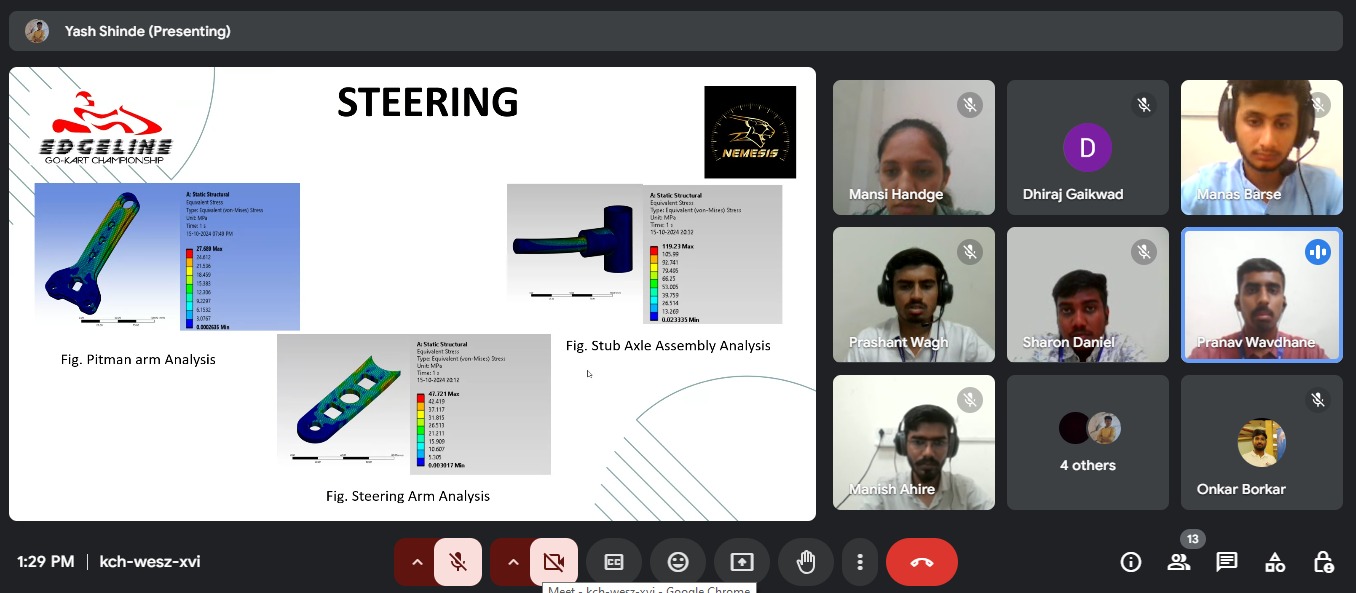
Why These Follow-Ups Make Edgeline Participants Strong
Many competitions simply evaluate.
Edgeline develops.
These follow-up sessions:
- Improve engineering accuracy
- Reduce major submission errors
- Increase professional discipline
- Prepare teams for industry-level thinking
- Strengthen India's motorsport ecosystem
This structured academic engineering approach is what separates Edgeline Go-Kart Championship from casual competitions.
Engineering Excellence Begins Before Racing
Before the kart touches the track…
It exists as:
- A drawing
- A calculation
- A simulation
- A business model
- Testing
Work Follow-Up Sessions ensure that those foundations are strong.
Because strong foundations create fast machines.
- And fast machines build strong engineers.